Recessed downlights with EPD: how to document your lighting in the LCA
HiluX now holds third-party verified Environmental Product Declarations (EPDs) for four recessed downlights - D3, D7, D8 and DS8. That means you can document the carbon footprint of your lighting precisely in the life-cycle assessment (LCA) and meet the embodied-carbon requirements now spreading across construction. Here is the overview: what an EPD is, why it has become a specification requirement, and how to use it.
What is an EPD (Environmental Product Declaration)?
An EPD - Environmental Product Declaration - is a standardised, third-party verified document that describes a product's environmental impact across its entire life cycle: from raw materials and manufacturing through use to end of life. The EPD is prepared to the international standards ISO 14025 and EN 15804 and registered with a recognised programme operator, such as The International EPD® System or a national EPD body.
Because an EPD follows fixed calculation rules (PCR - Product Category Rules), the figures can be compared directly across manufacturers. The headline indicator is GWP (Global Warming Potential), reported in kg CO₂ equivalents, which tells you how large a product's carbon footprint is.
Why do building projects require an EPD for lighting in 2026?
Across the EU and the wider construction sector, life-cycle assessment (LCA) has moved from a nice-to-have to a requirement. A growing number of national building codes now mandate a whole-life carbon calculation for new construction, and the permitted CO₂ limits are being tightened year on year - in several markets down to roughly 4-8 kg CO₂e/m²/year depending on building type, with a separate cap on the construction process itself. Lighting is part of that account.
This is where the EPD becomes decisive. An LCA can be built either on generic default data or on product-specific EPDs. Generic data is deliberately conservative and usually returns a higher carbon footprint than the real product. With a product-specific EPD, the consultant can calculate with the actual figures - and that can be the difference between passing or failing the limit.
At the same time, green building certification schemes such as DGNB, BREEAM and LEED reward documented environmental data on installed products. Choosing lighting with an EPD makes it easier for the architect, engineer and sustainability consultant to reach the target - and it future-proofs the project against the EU Taxonomy and the ESG and sustainability reporting rules now coming into force.
Which HiluX recessed downlights have an EPD?
We have had third-party verified EPD reference sheets prepared for our most widely specified recessed downlights for residential and commercial construction. Each EPD is registered to ISO 14025 and EN 15804:2012+A2:2019/AC:2021 and can be downloaded directly:
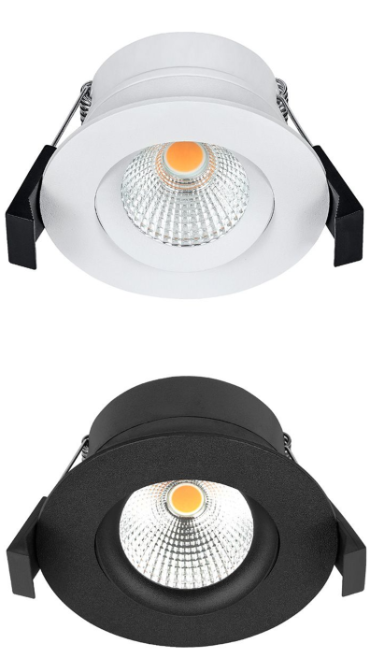
- Tiltable & rotatable 360°
- Just 34 mm recess depth
- EPD-documented · Ra97 · dimmable
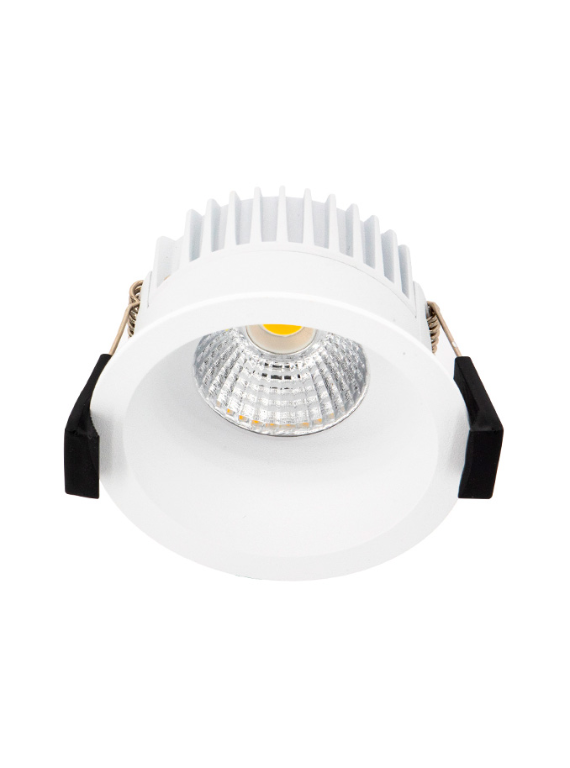
- Deep reflector — no glare
- IP44 for bathroom & outdoors
- EPD-documented · Ra95
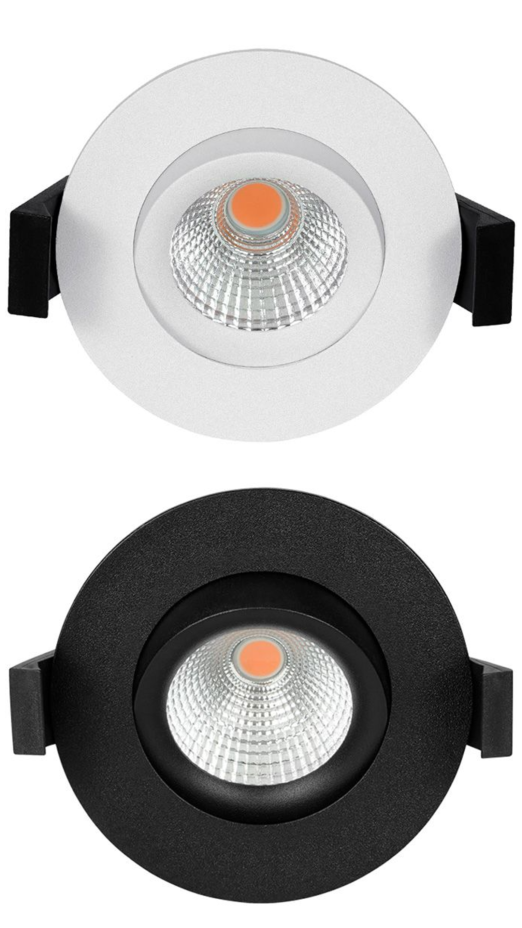
- Highest output: 640 lm
- Tiltable 360° · dimmable
- EPD-documented · Ra97
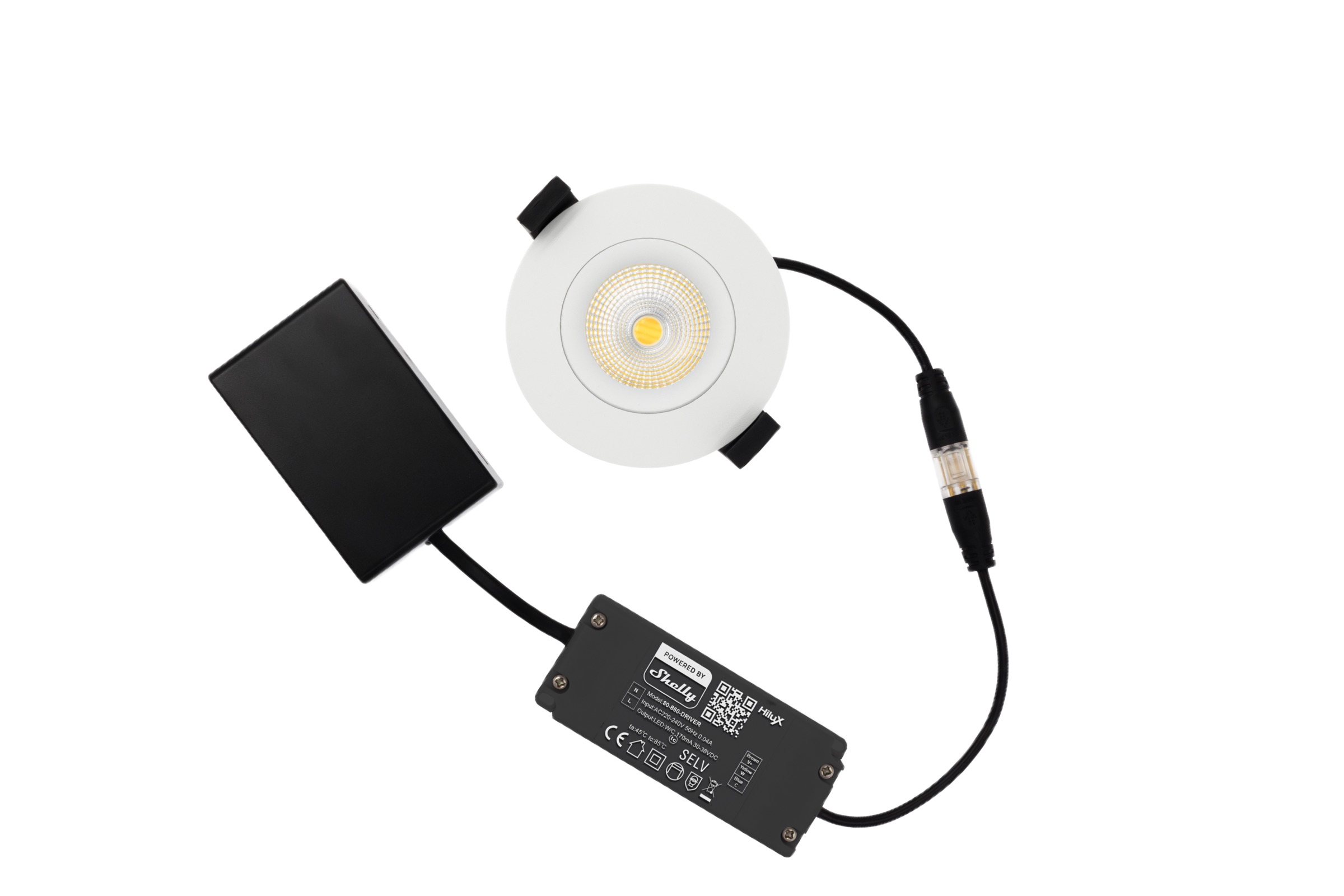
- Shelly WiFi/Bluetooth — no hub
- Tunable white 2200–6000 K
- EPD-documented · app control
All four are premium recessed downlights with high colour rendering (Ra95-Ra97), long service life and Danish engineering - now with the environmental documentation that construction projects demand.
How to use the EPD in your LCA
Follow these steps when your lighting has to be included in the life-cycle assessment:
- Download the EPD reference sheet for the relevant HiluX recessed downlight below or from the product page.
- Find the GWP value (kg CO₂ equivalents) and the declared unit - typically per luminaire over the declared service life.
- Enter the figure into your LCA tool in place of the generic lighting category.
- Multiply by the number of luminaires in the project so the total contribution from lighting appears in the carbon account.
- Keep the EPD PDF on file as supporting documentation for the project record - both for the authorities and for any DGNB, BREEAM or LEED audit.
Product-specific EPD versus generic data
Generic environmental data covers an entire product category and is set conservatively to stay on the safe side. A product-specific EPD is based on the actual product and therefore gives a more accurate - and usually lower - carbon footprint. For the consultant, that means a more representative calculation and a better chance of staying under the CO₂ limit without compromising on light quality.
In short: an EPD makes it possible to select lighting on an informed basis - aesthetically, technically and environmentally.
Frequently asked questions
What does EPD mean?
EPD stands for Environmental Product Declaration. It is a third-party verified document that describes a product's environmental impact across its entire life cycle, prepared to the standards ISO 14025 and EN 15804.
Which HiluX recessed downlights have an EPD?
HiluX D3, D7, D8 and DS8 have third-party verified EPD reference sheets. They can be downloaded free here on this page and from the individual product pages.
Is an EPD mandatory for lighting?
The EPD itself is not mandatory, but the LCA on new construction increasingly is. A product-specific EPD gives a more accurate carbon footprint than generic data and makes it easier to meet the embodied-carbon limits in national building codes and to achieve DGNB, BREEAM or LEED certification.
Where do I find the GWP value in the EPD?
The GWP (Global Warming Potential) is stated in the EPD reference sheet, reported in kg CO₂ equivalents for the declared unit. You can enter that figure directly into your LCA tool.
Does the HiluX EPD cost anything?
No. The EPD reference sheets can be downloaded free as PDFs here on hiluxled.dk - from this article, from the Datasheets page and from every product page.
Need an EPD for your next project?
Download the Environmental Product Declarations free, or contact us for advice on lighting for sustainable construction.